
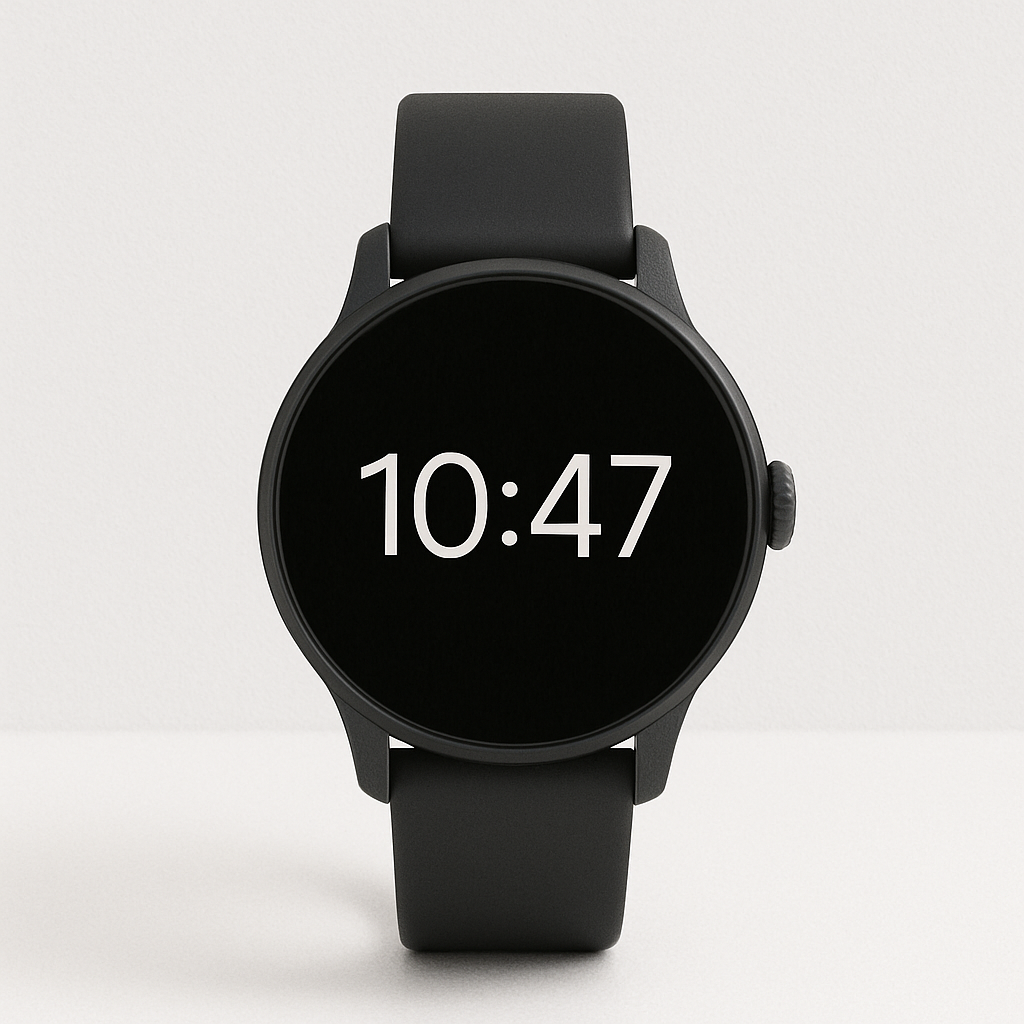
Smartwatch Buying Guide 2025: How to Choose the Right Smartwatch for Your Lifestyle
A few years ago, a watch’s job was simple – show the time.
Today, a smartwatch is your fitness coach, call receiver, notification center, sleep tracker, and even a mini remote for your phone.
Because of this, choosing the right smartwatch has become more confusing than ever. So many brands, so many features, so many price points – how do you know which one is actually right for you?
In this smartwatch buying guide 2025, we’ll break it down step by step so you can confidently pick a watch that fits your lifestyle, not just your wrist.
1. Start With Your Purpose – Why Do You Want a Smartwatch?
Before looking at brands and models, ask yourself one simple question:
“What will I actually do with this smartwatch?”
Your answer will put you into one (or more) of these categories:
-
Fitness-focused user – You care about steps, heart rate, workouts, calories, sleep.
-
Busy professional – You need calls, notifications, calendar alerts, quick replies.
-
Style-conscious user – You care about design, strap quality, display, always-on screen.
-
Parent / safety-conscious – You want a smartwatch for kids to stay connected.
-
Casual user – You just want basic smart features with good battery and comfort.
Once you know your primary purpose, the rest becomes much easier.
2. Compatibility – Android, iOS, or Both?
Not every smartwatch works the same way with every phone.
-
Android users have more budget and mid-range options.
-
iPhone users usually get the best experience with Apple Watch, but many third-party watches also support iOS with limited features.
Before buying, always check:
-
Does the watch support your phone’s OS?
-
Is there a companion app available in Google Play / App Store?
-
Are key features like notifications, calling, and health data fully supported?
A smartwatch with poor app support can turn into just a fancy bracelet.
3. Display Matters – AMOLED vs LCD
Your smartwatch screen is what you look at every single day. Two main types dominate the market:
AMOLED Display
-
Deep blacks, vibrant colors
-
Better for always-on display
-
Looks premium and modern
-
Great for outdoor visibility in many models
LCD / IPS Display
-
Usually found in more budget-friendly watches
-
Slightly less punchy colors
-
Still fine for basic use and indoor viewing
If your budget allows, an AMOLED smartwatch is an excellent investment, especially if you care about design and readability in bright light.
4. Health & Fitness Features – Don’t Just Look at the Icons
Almost every smartwatch now shows:
-
Steps
-
Heart rate
-
Sleep
-
Calories
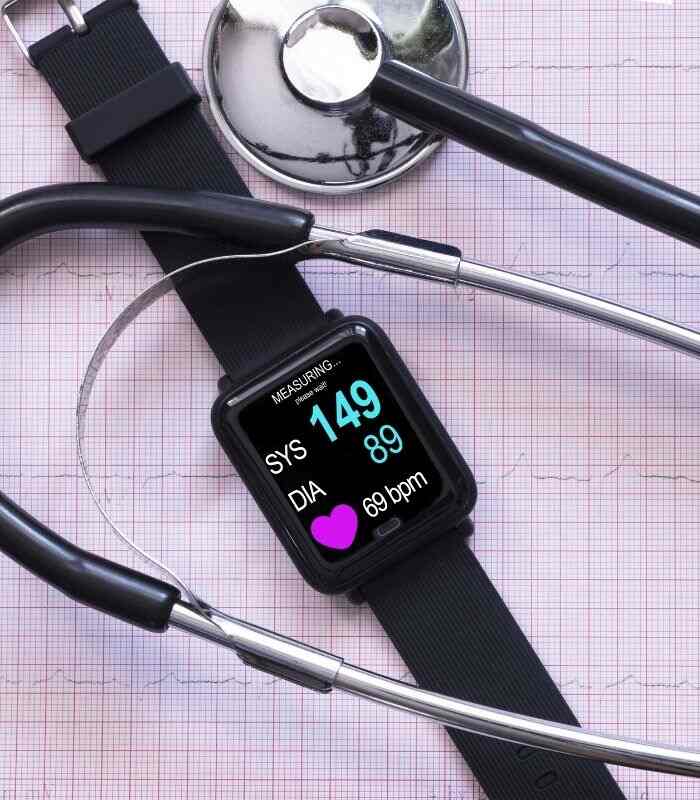
But the quality and accuracy of these features vary a lot. Look for:
-
Continuous heart rate monitoring
-
SpO₂ (blood oxygen) tracking
-
Multiple sports modes (running, walking, cycling, gym, etc.)
-
Sleep tracking with breakdown of light/deep sleep (if available)
If you are serious about fitness, choose a watch from a brand that is known for reliable sensors, not just flashy UI.
5. Battery Life – Realistic Expectations
Battery life can make or break your experience.
Ask yourself:
-
Are you okay with charging every day?
-
Or do you prefer charging once a week?
Typically:
-
Smartwatches with AMOLED + always-on + calling + heavy use may last 2–3 days.
-
More optimized watches with basic use can last 5–10 days.
Check both:
-
Battery capacity (mAh)
-
Brand’s claimed backup – and then mentally reduce it a little for real-life usage.
If you travel a lot or hate frequent charging, battery life is a top priority.
6. Bluetooth Calling – Need or Luxury?
Bluetooth calling smartwatches let you:
-
Receive and make calls directly from your wrist
-
Use the watch’s mic and speaker
-
See caller ID without touching your phone
Great for:
-
Office goers
-
Drivers
-
People who often keep their phones in bags/pockets
However:
-
Calling features drain battery faster
-
Cheap watches may have low sound quality or weak mic
If you really need calling, invest in a watch known for good call clarity, not just the feature checkbox.
7. Build Quality, Design & Comfort
A smartwatch is also a fashion accessory. You’ll wear it for long hours, sometimes all day.
Look at:
-
Body material – Plastic, zinc alloy, or stainless steel
-
Strap quality – Silicone for sports, leather/metal for classic look
-
Weight – Too heavy = uncomfortable, too light = sometimes feels cheap
-
Size & shape – Round vs square, 1.3" vs 1.9" etc., depending on your wrist size
Try to imagine:
“Can I wear this watch to the office, gym, and family events without feeling odd?”
If the answer is yes, you’re looking at the right kind of design.
8. Water & Dust Resistance – Check the Rating
If you sweat a lot, work out, or get caught in rain often, water resistance is essential.
Look for ratings like:
-
IP67 / IP68 – Protection against dust and water (splashes, sweat, light rain).
-
5ATM, 10ATM – Better suited for swimming and more serious water exposure (on supported models).
Never assume all smartwatches are safe for swimming. Always check what the brand explicitly mentions.
9. App Experience – The Invisible Dealbreaker
Many people ignore this, but your companion app controls:
-
Watch faces
-
Fitness data
-
Notifications
-
Settings
A clean, user-friendly app with regular updates gives you a smooth experience. A buggy, outdated app will frustrate you every day.
Before buying, search the app’s name in the app store, read ratings and reviews for a quick idea.
10. Brand, Warranty & After-Sales Support
A smartwatch is an electronic device. Problems can happen.
So always consider:
-
Warranty duration (usually 6–12 months)
-
Is there local support or service center?
-
Does the seller clearly explain warranty terms?
Buying from a trusted smartwatch-focused store is safer than buying from a random social media page that may disappear in a few months.
11. Budget Planning – Don’t Just Chase the Cheapest Option
It’s tempting to choose the lowest price. But with smartwatches, “too cheap” often means compromise in:
-
Sensor quality
-
Battery
-
Build
-
Software stability
Instead, decide on a realistic budget range, such as:
-
Entry-level
-
Mid-range
-
Premium
Then pick the best-value smartwatch in that range, not just the cheapest one.
12. Quick Checklist Before You Buy
Before you confirm your order, go through this quick checklist:
-
✅ Is it compatible with your phone (Android / iOS)?
-
✅ Does it have the health features you truly need?
-
✅ Are you satisfied with battery backup expectations?
-
✅ Is the display quality (LCD/AMOLED, brightness) good for your usage?
-
✅ Is it comfortable in size and weight for your wrist?
-
✅ Does it have clear warranty and support?
If most of these answers are Yes, you’re ready to buy.
FAQ – Smartwatch Buying Guide 2025
Q1. Which smartwatch is best for everyday use?
The best smartwatch for everyday use is one that balances design, notification handling, health tracking, and battery life. You don’t always need the most expensive model – you need the one that matches your daily routine.
Q2. Do I really need Bluetooth calling in a smartwatch?
You don’t need it, but it’s very convenient if you drive, attend meetings, or often keep your phone away from your hands. If you always hold your phone, you can skip this feature and save money.
Q3. Are budget smartwatches worth it?
Yes, if you pick them from reliable brands or trusted stores. Budget smartwatches are great for first-time users who want fitness tracking and basic smart features without spending too much.
Q4. How accurate are smartwatch health sensors?
Smartwatches are not medical devices, but good brands give reasonably accurate trends for heart rate, steps, and sleep. Use them as guides, not as replacement for professional medical tests.
Q5. How long should a good smartwatch last?
With proper care, a decent smartwatch should last 1.5–3 years, depending on build quality, battery health, and software support.
Final Thoughts
Buying a smartwatch in 2025 doesn’t have to be confusing. When you focus on your lifestyle first, and then on features, you naturally find the right match.
Think about how you live your day, what you really need on your wrist, and how much you are willing to spend. Then choose a smartwatch from a trusted seller that offers transparent specs, genuine products, and real after-sales support.
Your smartwatch shouldn’t just look smart –
It should make your life smarter, healthier, and easier every single day.

![How to Change Time on Fossil Smart Watch [A GUIDE]](https://www.techdenbd.com/backend/img/blog/how-to-change-time-on-fossil-smartwatch-2022-06-29-62bbdf51aaea7.jpg)